
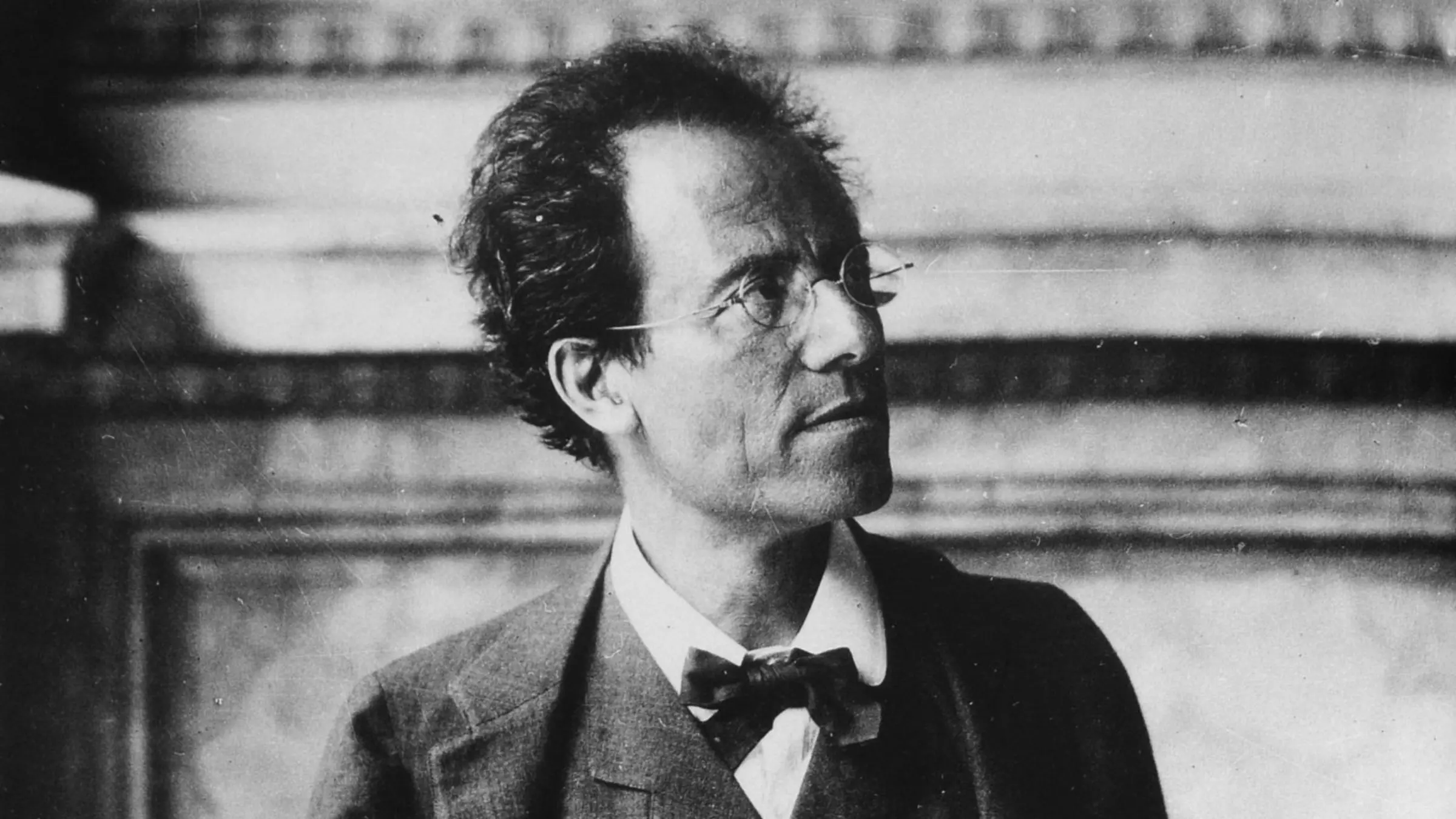
“A symphony must be like the world. It must contain everything.”
Gustav Mahler
I recently told a friend that Mahler’s Fifth Symphony is the most meaningful, life-affirming thing I’ve ever experienced, and then shared some clips from the first movement.
I might as well have shown him the first 10 minutes of Up and told him it’s my favorite feel-good film.
The beginning of Mahler’s Fifth Symphony is iconic. It’s also a relentless pounding of despair, anchored in the melancholy of C-sharp minor.
Here’s what I assume my friend was thinking: The music that changed your life was … that? I wonder how long it takes to get a restraining order.
I texted him later—he hadn’t blocked my number yet—to explain myself and put the first movement in context. I needed him to know that underneath my charming exterior there didn’t lie an arenaful of nihilists at a Morrissey concert.1
“I love this,” he replied. “Music is such a movement of emotion. It’s a powerful part of my existence.”
Whew. Reputation restored. DAVE-DEFCON alarms deactivated. Friendship saved.
I liked what I had written, so I thought I’d copy-and-paste it here. But, true to form, I’ve turned a handful of blue bubbles into a whole Mahler megillah.
Which starts in three … two … one …
First Impressions Can Be Deceiving
Mahler’s Fifth and I met on a blind date in college.2 I had just started a classical music course and we students were expected to attend concerts. I knew nothing about this symphony beforehand, but No. 5 is usually a good number for music: Beethoven, Tchaikovsky, Bega.
Picture it: Yoel Levi, the conductor, is on his podium, facing the orchestra. It’s dead silent. He raises his baton, holds it still, then slices the air in half.
The downstroke launches a short trumpet fanfare that’s all confidence and power. There’s the tiniest of pauses, and the trumpets return with a fanfare that outdoes the first one …
Until the very last note …
And then it all comes crashing down in a massive, disorienting mindfuck I remember vividly, with chills, to this day.
You’ll hear what I mean at the 1m 37s mark.
The Agony
Mahler describes the first movement as a trauermarsch, which is German for funeral march.
I describe it as an abgrund, which is German for abyss.3 That single note at the end of the second trumpet call knocks you off balance. Sense and order disappear. The music swirls around you, pulls you in like a whirlpool, and won’t let you go.
Remember, I wasn’t hearing this on a CD. It was in a concert hall. Sound waves from a hundred instruments are surging from the stage, and I’m sitting in the center of the blast zone. This isn’t just music rushing over me. This is particles of energy cutting through me, ricocheting off the walls, and then hitting me again from a thousand different angles.
This movement is depressing, disorienting, and terrifying, but Mahler is taking us to such lows because he’s planning to take us to great heights. Ellie must die before Carl can fly.
Back on Solid Ground
The first movement ends. I’m dizzy, unnerved, and wrung out, like the whole universe is an existential washing machine and I’ve just survived the spin cycle. Nothing here but me, misery, and a bunch of mismatched socks.
The second movement opens with the intensity of the first one, but not the darkness. About a minute and a half in, Mahler reins in the full orchestra, and the woodwinds poke around tenuously to make sure the way is clear. It is! More instruments join in, flirting with optimism, but not quite seeming to commit to it. Things wind down softly with the still-cautious woodwinds.
Here’s the whole movement:
Here’s a short excerpt (in case you’re in a hurry):
In the third movement, we hear Mahler changing his tune. Which, I guess, isn’t idiomatic when you’re talking about a composer.
This movement is lively and hopeful, but often gets overlooked4 because it has the absolute worst possible place in the lineup. The fourth movement is up to bat.
The Thing I Hate Most in Life Is …
… that I will never again be able to hear the fourth movement, the Adagietto, for the first time.
Let’s go back to that concert hall. My brain is still processing the first movement. The second and third movements, I sense, are taking me on a journey out of the darkness. I have no idea what’s about to happen.
Soft strings. A harp. It’s slow and gentle. It hits me immediately: This isn’t music. It’s empathy—love, compassion, connectedness, all of it.
Mahler has discovered the frequency of empathy and tuned a hundred instruments to it, and every atom in my body is vibrating to it.
Everything I experienced in the first movement is turned on its head. These sound waves don’t surge; they flow. I’m not sitting in a blast zone; I’m being cradled. Particles of energy aren’t cutting through me; they’re being absorbed.
Finding the Words
It took three decades, a flight to Peru, and a serious case of hypoxia for me to discover the right term to describe what I felt in the concert hall all those years ago: the sublime.
Here’s how I define the sublime: an aesthetic experience so vast and incomprehensible that your brain simply can’t process it. It’s the awe I felt contemplating Machu Picchu. It’s the infinity I feel when I gaze at the stars. And it’s the wonder I feel when I hear the first and fourth movements.
(I know I’m oversimplifying things here. I can’t speak to the sublime as well as the greats of transcendental philosophy like Immanuel Kant, Arthur Schopenhauer, and The Waterboys.)
You don’t need to be spiritual to experience the sublime. Everything you need is right here on our plane of existence: unlimited aesthetic wonder and limited brainpower to grasp it. But if you’d like to ascribe the sublime to something spiritual or religious, I can’t prove you wrong.5
The Ecstasy
Anything that comes after the Adagietto has to be a letdown, right? Nope. Because even though we’ve just experienced the sublime, Mahler hasn’t finished telling the story.
Joy is here.
This isn’t a bold exclamation of joy, like the last movement of Beethoven’s Ninth Symphony.6 It’s a sudden realization of joy.
Remember when I told you this whole thing began with a relatively short text message to a friend? I think what I wrote there, unfiltered and unedited, does a superb job of explaining my relationship with the fifth movement:
Fifth (and last movement) is just sheer joy. Full of energy, but not energetic, if that makes any sense. It’s like Mahler was able to capture what it feels like when all of a sudden you realize you’re happy … like the sun has just come out in your brain … and translated it to music. It’s like hey, I’m happy! Wait, am I really happy? A little doubt. Holy shit, I am. So fucking happy. It’s been so long and it feels so good. This is definitely worth listening to all the way through, but if you’re pressed for time, listen to the first few minutes and then hop to 1:13 or so to see how it all comes together at the end. Goosebumps for me, every time.
Like the World, Containing Everything
I’m back in the concert hall. The symphony has concluded. There’s the tiny pause you hear at the end of every classical performance (because no one wants to clap first and feel like an idiot if it’s not over) and then everyone erupts in applause. I’m on my feet immediately, knowing that I’ve just been through something that has changed me in a way I can’t quite understand.
Here’s how I concluded the text message. It works well as the conclusion here too.
Basically, Mahler has captured the journey from despair and depression through to love and joy. And the fact that it goes that way (not the other) makes it … gonna get kind of philosophical here … everything to me. It echoes and validates my feelings when I’m down, starts to cheer me up, gives me hope, shows me there’s love in the world, and brings me to a place of joy.
It’s such a deeply meaningful piece of art for me that I’m not even going to end with a pun or dad joke.
Footnotes/Fußnoten
- What’s actually under my charming exterior? More charm. I’m a fucking delight. ↩︎
- Technically, I was in college and Mahler was dead, but why let facts get in the way of a good metaphor? ↩︎
- I don’t speak German but I can if you like—yeow! ↩︎
- Case in point. ↩︎
- After visiting Sedona’s energy vortices in 2023, I wrote that something doesn’t need to be mystical to be magical. ↩︎
- I can build a convincing argument that Beethoven’s Ninth Symphony is the pinnacle of human achievement, overshadowing the printing press, space travel, and the Pizza Bagel. ↩︎